The shift from print flyers to digital-first home buying means the first showing always happens online.
Best real estate photo editing is the strategic post-processing of property images because it bridges the gap between a raw camera file and a signed contract. It optimizes digital curb appeal, drives buyer engagement, and gives properties a competitive edge on the Multiple Listing Service (MLS) and major real estate portals.
Why Does the ROI of Polished Property Photos Matter?
High-quality real estate photography directly impacts listing performance and buyer psychology. Data shows that professional post-processing reduces time on market and increases closing prices. The Real Estate Image Editing Service Market Revenue was valued at USD 1.2 Billion in 2024 and is estimated to reach USD 2.5 Billion by 2033, growing at a CAGR of 9.2% from 2026 to 2033. Digital curb appeal is a strict requirement for the modern real estate broker.
Industry data consistently points to visual marketing as the primary driver of online property browsing. In fact, listings featuring professional real estate photo improvements can sell 32% faster than those with standard images. Listings on platforms like Zillow, Realtor.com, and Redfin are sorted by algorithms that favor listings with high-resolution images. Better photos generate a higher click-through rate, which signals the algorithm to push the residential real estate listing higher in search results.
Investing in professional editing directly impacts your success through four key business results:
- Faster Property Sales: Stunning images attract more buyers. This leads to quicker offers and a shorter time on the market.
- Higher Engagement: Great photos grab attention on listing sites and social media. This results in more clicks, views, and inquiries.
- Reduced Time on the Market: A faster sales cycle means lower holding costs. You can move on to your next property sooner.
- Stronger Brand Reputation: Consistently beautiful listings build your brand. They show potential buyers that you are a serious, professional agent, which increases trust and the perceived value of the properties you represent.
How Do Editors Fix Light, Color, and Perspective?
The core fundamentals of real estate image editing revolve around correcting camera limitations. Editors use post-processing software to fix color temperature, balance ambient light, and repair lens distortion. These structural edits ensure the property looks accurate and structurally sound to a potential property buyer.
Exposure and White Balance Correction
Cameras often struggle to balance different light sources, leading to unnatural tints. Editors perform color cast removal to fix the yellow hue from tungsten lighting or the blue tint from overcast skies. Proper white balance adjustment and color correction ensure realistic hues that match the actual space. Our process includes:
- Exposure and contrast optimization
- Color temperature balancing
- Shadow and highlight recovery
- Lens distortion correction
- Professional sharpening techniques and noise reduction
Selective Color Adjustment
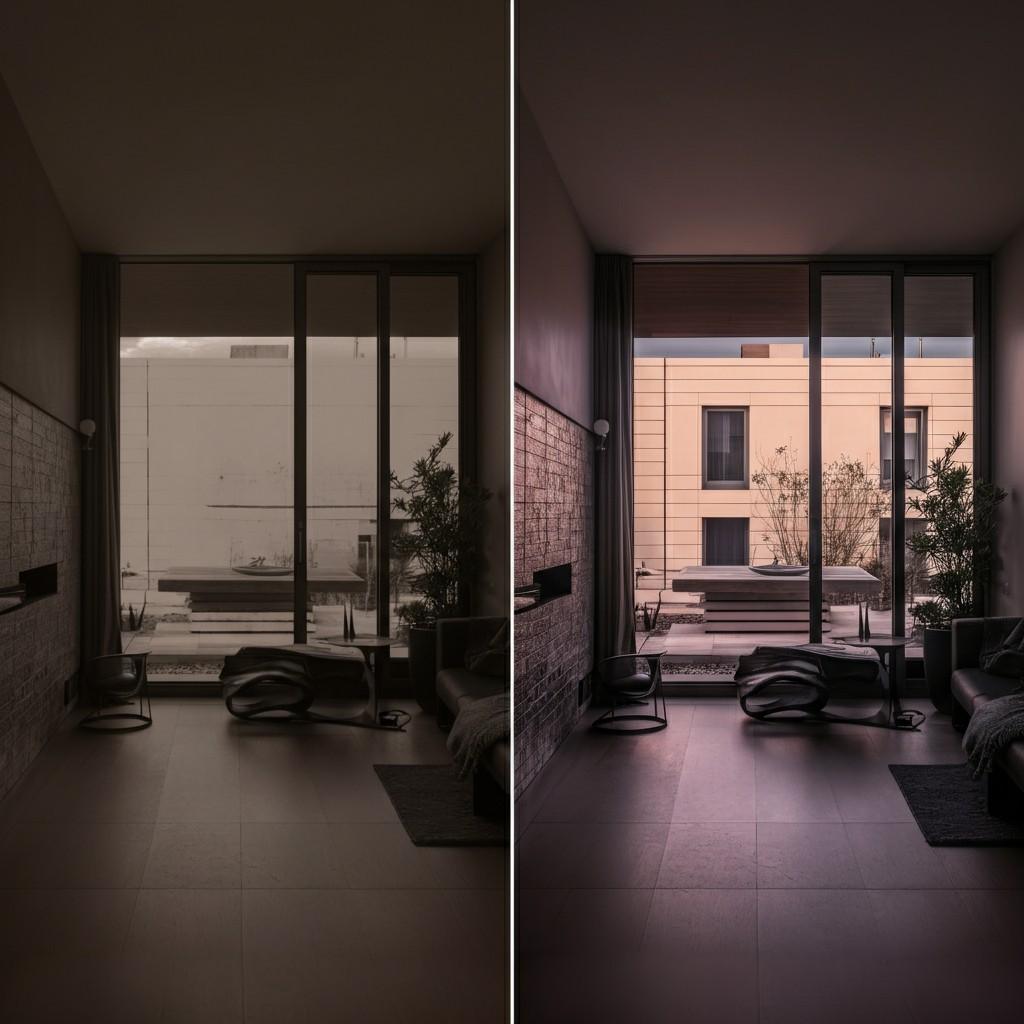
Sometimes, global color correction falls short. Selective color adjustment allows editors to target individual elements—such as warming up a cool-toned living room while keeping the natural light from the windows crisp and true. This targeted approach ensures natural-looking results without the image feeling over-processed. It includes:
- Precise color corrections for individual elements
- Balanced lighting across different areas
- Natural-looking results that maintain authenticity
- Improved appeal without over-processing
Vertical and Horizontal Straightening (Perspective Correction)
A real estate photographer often uses a wide-angle lens to capture an entire room, which naturally causes barrel distortion and converging lines (where straight walls appear to lean inward). Vertical straightening and horizontal alignment fix this structural warping, presenting a realistic, upright view of the single-family home or commercial property.
Window Masking and View Optimization
Exposing a photo for a dark interior typically results in blown-out, pure white windows. Window masking is a specific technique where editors blend multiple exposures to retain the interior lighting while recovering the details of the exterior view, providing a complete picture of the property’s surroundings.
What Are Advanced Retouching Techniques?
Advanced edits move beyond basic color correction to solve complex lighting and staging problems. Techniques like High Dynamic Range (HDR) blending, day-to-dusk conversions, and virtual staging provide high-tier marketing assets. These methods create emotional connections and help homeowners visualize the space.
High Dynamic Range (HDR) Blending vs. Flambient
HDR blending takes multiple bracketed exposures (underexposed, overexposed, and neutral) and combines them to show detail in both the darkest shadows and brightest highlights. The Flambient method combines ambient light shots with flash photography frames to ensure accurate colors and crisp textures, particularly for luxury real estate. HDR benefits include:
- Perfect exposure balance
- Improved interior and exterior visibility
- Natural-looking results
- Increased buyer engagement
- Professional presentation quality
Day-to-Dusk (Twilight) Conversions
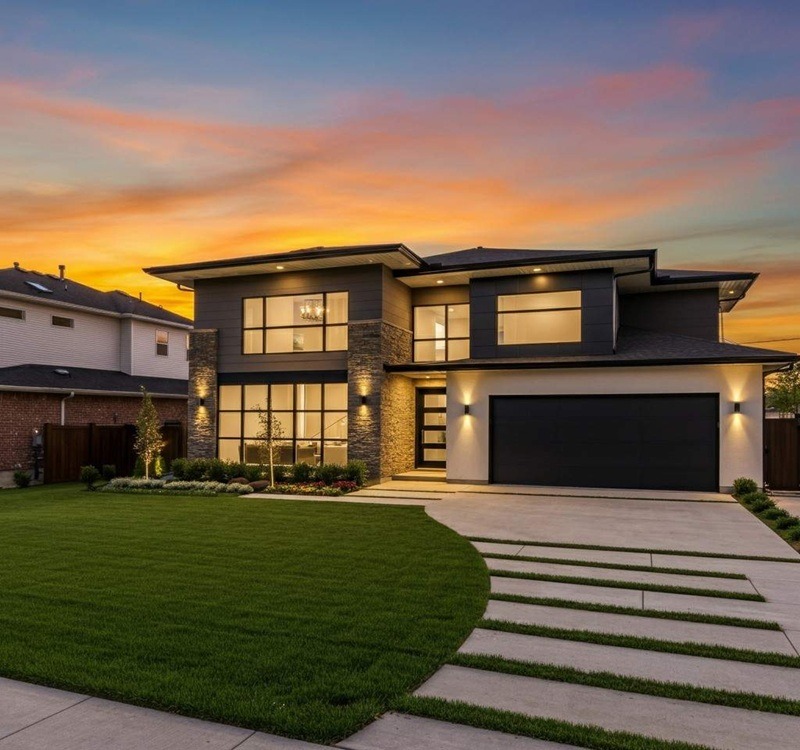
Twilight photography is proven to capture the highest buyer engagement online. Instead of scheduling a real estate photographer at sunset, editors use day-to-dusk conversion to digitally replace the sky, turn on interior and exterior lights, and adjust the color temperature to simulate a warm, inviting evening atmosphere.
360° Photo Editing and Virtual Tours
Immersive viewing experiences are a standard requirement today. 360° photo editing requires specialized panoramic stitching to blend multiple images. Expert editors handle exposure blending across different views and perform precise tripod and equipment removal so potential buyers can explore the property without visual distractions. 360° editing includes:
- Professional image stitching
- Tripod and equipment removal
- Exposure blending across views
- Color consistency throughout the tour
- Smooth transition optimization
Virtual Staging and Digital Interior Design
Empty rooms often look smaller than they are and fail to establish an emotional connection. Digital furniture rendering allows editors to insert realistic, to-scale decor into vacant rooms. This virtual staging is highly cost-effective compared to renting physical furniture, reducing the days on market (DOM).
Unwanted Element Removal and Decluttering
Clutter distracts from a home’s structural value. Blemish removal and decluttering involve clearing out personal items, removing cords and electrical wires, or erasing vehicles from the driveway. This creates the pristine presentation buyers expect from professional real estate retouching services. Unwanted Element Removal includes:
- Personal items and clutter
- Electrical wires and cables
- Construction equipment
- Unwanted people or vehicles
- Weather damage or debris
- Reflections and watermarks
Bedroom and Interior Adjustments
Proper interior adjustments can make a room feel inviting. Editors correct lighting to add warmth and perform color corrections for a pleasant atmosphere. We update cramped or poorly lit bedrooms into attractive spaces that showcase the room’s potential. Bedroom editing features include:
- Lighting improvement for warmth
- Color correction for appealing ambiance
- Clutter removal and organization
- Perspective correction for spaciousness
- Bed styling optimization and professional styling touches
What Are the Ethical Limits of Property Editing?
Maintaining trust is critical for any real estate agent. Editing must optimize presentation without crossing into property misrepresentation. The Realtor code of ethics dictates that permanent fixtures must remain untouched, while temporary distractions can be removed to show the home’s true potential.
| Feature Type | Status | Examples |
| Temporary Distractions | Safe to Edit | Parked cars, dead grass, moving boxes, weather issues, trash cans, and electrical cords inside. |
| Permanent Fixtures | NEVER Edit | Power lines, water towers, structural cracks, neighboring buildings, and permanent street signs. |
| Space Utilization | Requires Disclosure | Virtual staging, digital renovation mockups, and added architectural features. |
How Should Photographers Prep for Post-Processing?
A real estate photographer controls the quality of the final output before Adobe Photoshop is even opened. Proper pre-shoot preparation, such as standardizing lighting and shooting in RAW formats, guarantees that editors have the maximum amount of image data to work with.
- Standardize Lighting: Turn on all interior lights and open all blinds. This provides baseline ambient light and consistent color temperature across the property.
- Use a Tripod: Shooting on a tripod guarantees identical framing for bracketed exposures, which is mandatory for seamless HDR blending and panoramic stitching.
- Shoot in RAW: Unlike compressed JPEG files, RAW files retain complete sensor data. This allows editors to perform extreme shadow recovery and highlight retention without degrading the image quality.
Why Choose Professional Outsourced Photo Editing Over DIY?
Processing high-resolution images manually carries a high opportunity cost for real estate professionals. While DIY software seems cost-effective, partnering with a dedicated editing service scales volume, ensures consistent branding, and secures a fast turnaround time for MLS listing photos.
| Metric | DIY Editing (Lightroom/Presets) | Outsourced Photo Editing |
| Time Investment | 2–4 hours per property | 5 minutes (upload time) |
| Consistency | Varies by property/fatigue | Standardized quality assurance |
| Scalability | Hard cap on weekly volume | Unlimited processing capacity |
| Advanced Edits | Requires specialized training | Handled by dedicated experts |
How Does the PixcRetouch Workflow Operate?
PixcRetouch provides real estate retouching services designed for scalable volume and strict quality assurance. The process is tested and practical, offering a starting price of $0.25 per image and a guaranteed 24-hour turnaround time to keep property sales moving efficiently.
- Upload: Submit RAW files or JPEGs through a secure client portal.
- Instruct: Provide specific notes (e.g., “remove reflection in bathroom mirror” or “apply twilight sky replacement”).
- Process: Dedicated editors execute color correction, perspective correction, and specific requests.
- Review: Images undergo strict quality assurance.
- Delivery: Receive high-resolution, MLS-ready images within 24 hours. When resizing final images for web use, we convert layers to Smart Objects for non-destructive editing and use Photoshop’s “Preserve Details 2.0” resampling to ensure your listing photos never lose crispness or quality.
Frequently Asked Questions (FAQ)
What types of images can be edited?
We edit all types of real estate photos, including interior, exterior, aerial drone shots, and 360° panoramas. We accept various file formats, though RAW files yield the best results for dynamic range recovery.
How long does the real estate photo editing process take?
The standard turnaround time for core edits is 24 hours. Complex projects like virtual staging or large-scale virtual tours may require additional time, but speed is always prioritized.
Can smartphone photos be used for real estate listings?
Yes, smartphone photos can undergo image optimization to correct lighting, color, and basic distortion. However, high-resolution DSLR or mirrorless camera images provide the data necessary for professional-grade results.
How much does professional real estate photo editing cost?
Pricing depends on the complexity of the editing techniques required. Basic image optimization starts at $0.25 per image, offering a scalable solution for high-volume agents.
How does virtual staging actually work?
You provide photos of empty rooms, and digital designers scale and insert realistic 3D furniture models into the space. This visualizes the home’s potential without the logistical costs of physical staging.
The Bottom Line
- Speed to Market: Professional real estate photo editing reduces the time properties sit on the market by capturing buyer attention immediately.
- Technical Accuracy: Proper perspective correction, white balance adjustment, and HDR blending present the property accurately and attractively.
- Scalable ROI: Outsourcing post-processing frees up real estate professionals to focus on client acquisition and shooting more properties.
Ready to Elevate Your Real Estate Listings?
Don’t let subpar pictures hold your properties back. Experience the difference with PixcRetouch’s expert editing services. Try our free trial today and see how professional post-processing can boost your sales, build trust, and make every listing shine. Upload your images now to test our 24-hour turnaround risk-free.